Start with
Passengers plus every checked bag and carry-on
A decision guide for matching people and real luggage to the right passenger vehicle before an airport, hourly or group reservation is confirmed.
Direct answer
Maximum seating is not the same as usable airport capacity. Select a vehicle from passengers, checked bags, carry-ons, child seats, strollers, mobility equipment and oversized items together. A vehicle may have an open seat but no safe cargo space, so disclose the complete load and let the booking system or reservations team confirm the assignment.
Start with
Passengers plus every checked bag and carry-on
Space reducers
Child seats, strollers, wheelchairs and oversized items
Do not use
Maximum seat count as a luggage guarantee
Final decision
Specific vehicle and layout confirmed for the request
Capacity method
A useful capacity request lists adults, children, installed child seats, checked suitcases, carry-ons, backpacks, strollers and special items. Bag labels such as small or large can be inconsistent, so disclose unusual dimensions for golf bags, skis, instruments, sample cases or mobility equipment.
Cabin space should not be treated as overflow cargo space. Loose luggage can interfere with passengers, exits and driver visibility. If the party or load is close to a category limit, move up a vehicle class or ask about coordinating a separate luggage vehicle.
Count each suitcase and identify oversize or hard-sided cases.
Include roll-aboards, backpacks, briefcases and shopping bags.
List every child seat, stroller and portable crib because each consumes usable space.
Provide dimensions for wheelchairs, walkers, golf clubs, skis, instruments and production cases.
Category boundaries
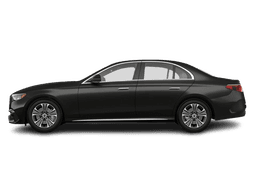
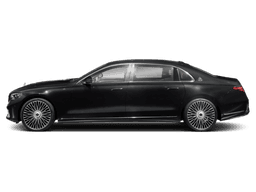
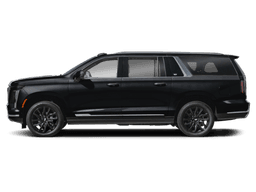
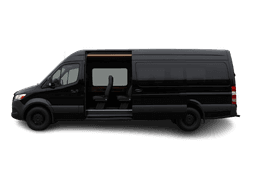
An executive sedan is the starting category for a smaller party with light luggage. An executive or luxury SUV should be considered when travelers have more checked bags, child-seat needs, sports equipment or additional cabin baggage. Sprinters or coordinated vehicles are custom-planned for larger parties, crews or loads that may require separate passenger and luggage space.
Category names do not guarantee one exact model, seat layout or cargo dimension. Availability, configuration and safe capacity must be confirmed for the requested date and itinerary.
Common miscalculations
A child seat occupies seating width and changes how adjacent passengers fit. A stroller may use cargo volume similar to another suitcase. Winter coats, garment bags and shopping parcels add volume even though they are not usually counted as formal luggage.
For groups, one larger vehicle can simplify timing, but only if the passenger layout and bags fit safely. Two coordinated vehicles can be the better plan when one Sprinter layout cannot hold both the maximum passenger count and the complete luggage load.
Decision support
These are planning boundaries, not guaranteed capacities. Confirm the specific request before travel.
| Category | Start here when | Move up when | Required confirmation |
|---|---|---|---|
| Executive sedan | Smaller party with light, standard luggage | More checked bags, a stroller, child seats or oversized items are added | Passenger and luggage limits shown for the selected vehicle |
| Executive or luxury SUV | More bags, family equipment or additional cabin space is needed | The party approaches maximum seating or cargo is bulky | Exact model or equivalent, seating arrangement and cargo fit |
| Sprinter | Larger party or team wants to travel together | Passenger count and luggage compete for the same layout | Specific layout, safe capacity, bag plan and availability |
| Coordinated vehicles | One vehicle cannot safely fit people and cargo | The party needs separate principals, teams or luggage handling | Movement timing, passenger assignments and billing scope |
Never place luggage where it blocks an aisle, exit, restraint or driver sightline.
Practical workflow
Count adults, children, installed child seats and any passenger who needs additional boarding or mobility space.
Count checked bags, carry-ons, strollers and special items and provide dimensions for anything unusual.
Do not plan around maximum seats when the trip includes airport luggage or bulky equipment.
Verify the vehicle category and declared load in the written reservation before travel.
Clear answers
There is no universal number because sedan models, bag dimensions and passenger count differ. A sedan is the starting category for a smaller party with light luggage; enter the exact bags and review the booking-system limit before selecting it.
No. Maximum seating and usable cargo capacity are different. A full passenger load can leave insufficient room for checked bags, strollers or equipment. Disclose the full load for confirmation.
Yes. Child seats use seating width and can affect how adjacent passengers fit. The seat type, number of children, stroller and luggage should all be included in the vehicle request.
Yes. Identify the item and provide dimensions where possible. Long or rigid cases can change the required vehicle even when the passenger count is small.
A Sprinter can be considered for a larger party or team, but layout and luggage capacity must be confirmed for the request. Some groups need coordinated vehicles rather than one maximum-capacity van.
Do not plan on loose luggage using passenger space. Bags must not block restraints, aisles, exits or driver visibility. Select a vehicle or vehicle combination that can carry the load safely.
Operational rules can change. These primary sources are provided so travelers and planners can verify the current requirement before travel.
Next step
People, bags, child seats and special items should appear in the request so the assignment is based on usable capacity.