


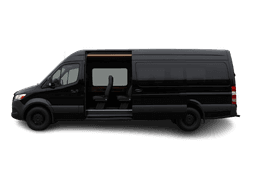
Trip formats
Airport transfers, point-to-point, hourly and grouped waves
Manifest-led ground transportation for speakers, executives, clients and teams moving between airports, hotels, meeting venues and dinners.
Direct answer
Conference transportation works best when it is treated as an operating plan, not a list of unrelated car orders. Group travelers by flight or departure window, assign a vehicle that fits people and bags, identify the legal venue entrance, name the on-site decision maker and define what happens when a flight, session or dinner moves.
Trip formats
Airport transfers, point-to-point, hourly and grouped waves
Core planning file
One controlled passenger and movement manifest
Key venue detail
Exact entrance, loading window and on-site contact
Quote basis
Schedule, vehicles, hours, routes, stops and waiting
Service design
Individual executives may need dedicated airport transfers or an hourly vehicle between meetings. Speakers arriving in the same window may be grouped into one correctly sized vehicle. A larger attendee movement may need scheduled waves rather than individual reservations. These are different operating models and should not be priced or dispatched as though they are interchangeable.
Start with the non-negotiable arrival time at the venue, then work backward through loading, hotel departure, traffic allowance and passenger readiness. The schedule should state which movements are fixed and which can move if a flight or session changes.
Best for a principal with a changing schedule, confidential calls or several meetings.
Best when travelers land near one another and the vehicle fits the combined luggage load.
Best for moving larger groups against registration, session or dinner times.
Best when the planner needs controlled flexibility around a changing program.
Operations
The working manifest should assign a unique movement ID and include traveler name, mobile contact, flight or pickup location, destination, required arrival time, party size, luggage, vehicle, billing group and special instructions. Version changes should be timestamped so dispatch, the planner and the on-site contact do not work from different schedules.
Avoid burying schedule changes in separate email chains. Assign one authorized contact who can approve changes that affect vehicles, hours or routes, and one on-site contact who can identify passengers at the venue.
Day-of execution
A venue address is not always a usable pickup point. Confirm the entrance, legal loading location, time window, credentials and the person authorized to speak for the event. For Javits Center, Midtown hotels and large venues, active traffic controls can change how close a vehicle may stage.
The contingency plan should cover delayed flights, a session running long, separated groups, unavailable curb space and a passenger who cannot be reached. State who makes the decision, how passengers are notified and whether the vehicle continues, waits or is reassigned.
Decision support
Use the smallest operational model that still protects the required arrival time and passenger experience.
| Movement | Best service format | Critical inputs | Common failure to prevent |
|---|---|---|---|
| Airport to hotel | Individual or grouped transfer | Flight, terminal, bags and hotel entrance | Grouping flights that are too far apart |
| Hotel to conference | Timed vehicle or departure waves | Guest list, loading point and venue deadline | Using the street address without the correct entrance |
| Speaker or executive program | Dedicated hourly vehicle | Full itinerary, contacts and priority stops | Booking separate cars for a fluid schedule |
| Dinner or reception | Staggered outbound and return plan | Reservation times, party sizes and return windows | Assuming everyone will leave together |
| Multi-day conference | Master manifest with daily movement sheets | Version owner, billing codes and change authority | Dispatch working from an old version |
Practical workflow
List each airport, hotel, venue and dinner trip with a required arrival time and accountable contact.
Group compatible travelers and record people, bags, vehicle needs, billing references and special instructions.
Confirm loading points, venue restrictions, traffic advisories and realistic buffers before assigning vehicles.
Distribute a timestamped plan and define the single channel for day-of changes and escalation.
Clear answers
Provide event dates, airports, hotels, venues, required arrival times, passenger and luggage counts, proposed vehicle types, estimated hours, stops and the number of simultaneous movements. A draft manifest is better than a headcount alone.
Yes, when arrival times, terminal logistics, waiting tolerance and luggage capacity make grouping practical. The quote should state the grouping assumption and what happens if a flight is delayed.
Use point-to-point for a fixed trip with one pickup and destination. Use hourly service when the same vehicle must remain available across meetings, changing departure times or several stops.
Name one person authorized to approve operational or cost changes. Use one channel for updates, timestamp each revision and confirm that dispatch has accepted the change.
The manifest can include department, project or cost-center references. Confirm the available invoicing and account setup before service rather than assuming a particular billing format.
Submit a working schedule as soon as dates and major movements are known. Vehicle availability, venue restrictions and simultaneous arrivals become harder to solve close to the event. The final manifest can be updated through an agreed cutoff.
Operational rules can change. These primary sources are provided so travelers and planners can verify the current requirement before travel.
Continue planning
Account-oriented executive transportation and business travel planning.
ExploreBuild the passenger and movement file used for quoting and dispatch.
ExploreWork through timing, staging, communications and contingency planning.
ExploreNext step
Share the draft manifest, event dates, venues and required arrival times. The transportation plan can then be scoped around actual movements and vehicle needs.